

Stone Base Oven vs Metal Base Oven 2025: Essential Comparison for the Crispiest, Most Authentic Pizza- Kitchen Craft Nepal


Stone Base Oven vs Metal Base Oven: The Ultimate Comparison for Perfect Pizza in 2025
Stone base ovens and metal base ovens stand as two primary options in commercial pizza deck ovens, each delivering unique baking results. Choosing between a stone base oven vs metal base oven can significantly impact your pizza’s crust texture, cooking speed, and overall quality.
Whether you’re running a pizzeria, bakery, or restaurant, understanding the differences in stone base oven vs metal base oven performance is crucial for achieving consistent, professional results.
This comprehensive guide explores the pros, cons, and key factors to help you decide which is best for your kitchen.
Table of Contents
- What is a Stone Base Oven?
- What is a Metal Base Oven?
- Key Differences: Stone Base Oven vs Metal Base Oven
- Pros and Cons of Stone Base Ovens
- Pros and Cons of Metal Base Ovens
- Which is Better for Pizza: Stone or Metal Base?
- Factors to Consider When Choosing
- Conclusion: Make the Right Choice for Your Kitchen
What is a Stone Base Oven?
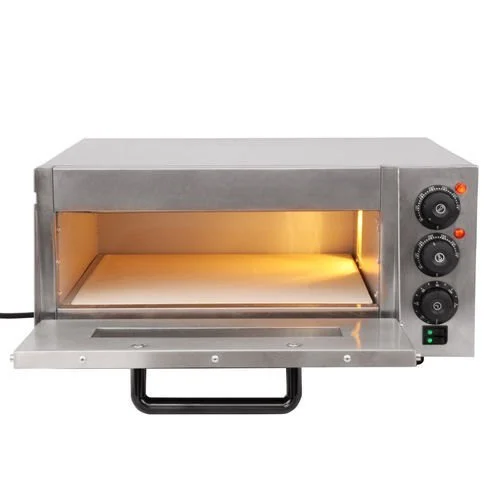
A stone base oven, also known as a stone hearth or cordierite deck oven, features a thick baking surface made from natural stone materials like cordierite, granite, or firebrick.
These ovens are standard in traditional commercial pizza setups because the porous stone absorbs moisture from the dough while retaining heat exceptionally well.
Stone base ovens excel at creating authentic, crispy crusts with even browning—perfect for Neapolitan, artisan, and New York-style pizzas.
In commercial kitchens, stone base ovens are favored for their ability to mimic wood-fired results without the hassle of open flames.
.
What is a Metal Base Oven?
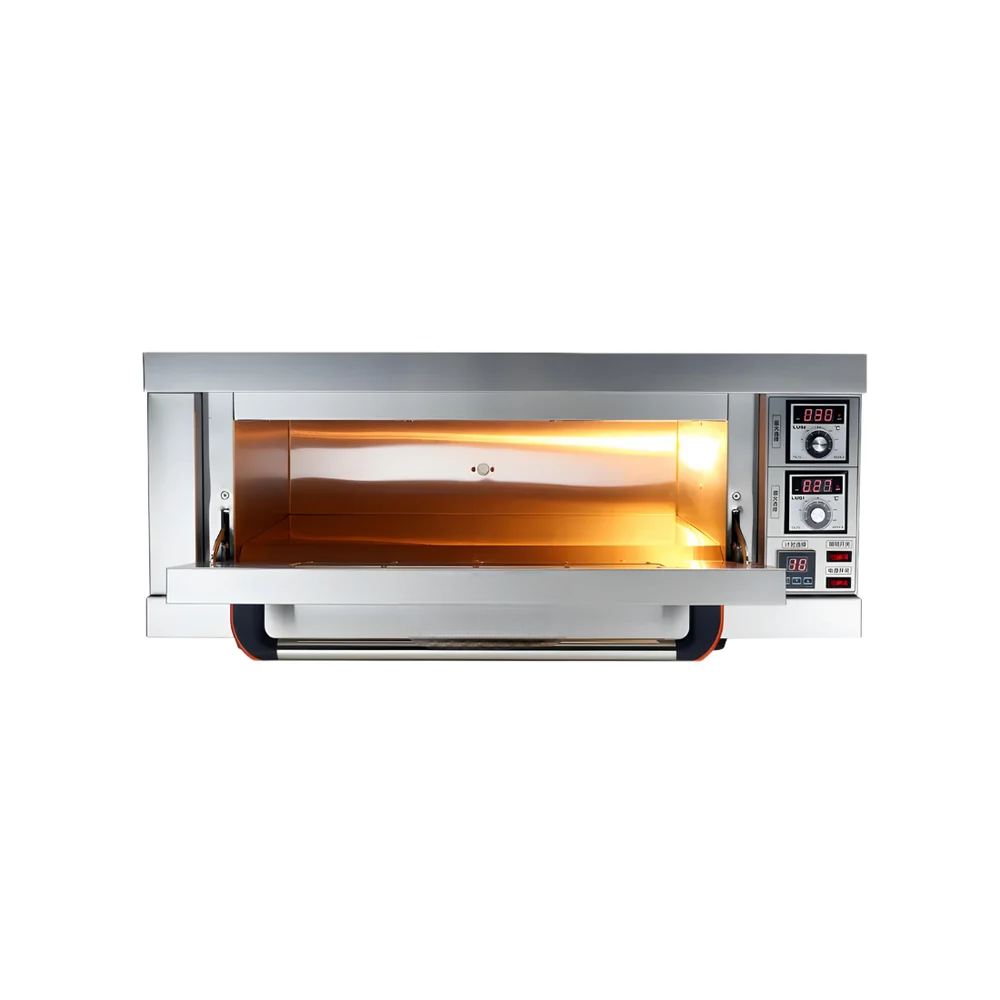
A metal base oven uses a steel or aluminum deck as the baking surface. These are less common in traditional pizza making but offer advantages in certain scenarios.
Metal conducts heat much faster than stone (up to 20 times more efficiently), leading to quicker preheat times and rapid recovery between bakes.
While metal base ovens can produce crispier bottoms faster, they risk hot spots or burning if not monitored carefully.
They are durable and versatile for non-pizza items like breads or roasted vegetables.
Key Differences: Stone Base Oven vs Metal Base Oven
The core distinction in stone base oven vs metal base oven lies in heat transfer and crust development:
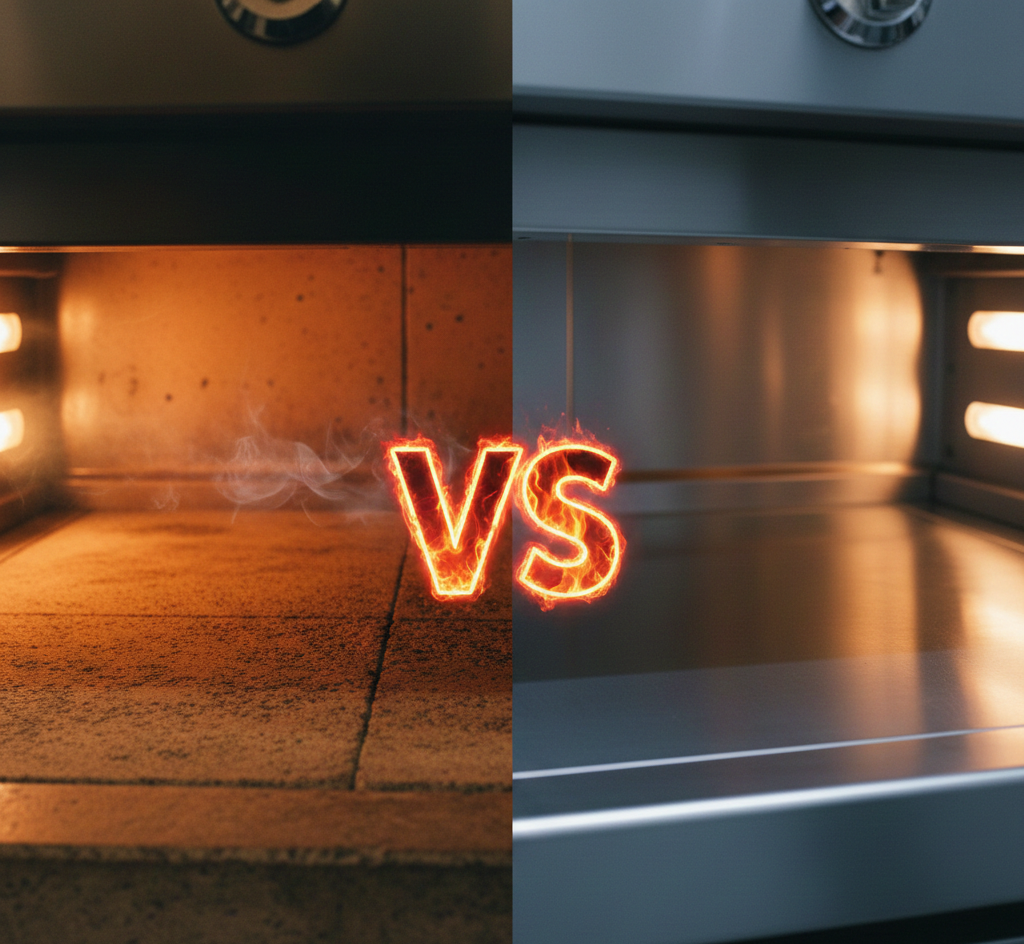
- Heat Retention and Distribution — Stone retains heat longer and distributes it evenly, reducing hot spots. Metal heats up and cools down faster, providing intense direct heat.
- Crust Texture — Stone absorbs moisture for a chewy-yet-crispy traditional crust. Metal delivers ultra-crispy, blistered bottoms quicker.
- Preheat and Recovery Time — Metal preheats faster (often 30-45 minutes vs 60+ for stone). Stone holds temperature better during high-volume baking.
- Durability — Metal is nearly indestructible and resistant to cracking. Stone can crack from thermal shock but lasts decades with care.
For visual comparisons, see these side-by-side tests:
Pros and Cons of Stone Base Ovens
Pros:
- Superior even heat for consistent results across batches.
- Moisture absorption creates authentic crispy, non-soggy crusts.
- Ideal for traditional pizza styles mimics brick oven performance.
- Excellent for breads and pastries beyond pizza.
Cons:
- Longer preheat times (up to 10 to 15 mins).
- Risk of cracking if not handled properly.
- Heavier and more expensive initially.
Stone base ovens are the choice for most professional pizzerias due to their reliable, traditional results.
Pros and Cons of Metal Base Ovens
Pros:
- Faster heat transfer for quicker cooking and recovery.
- Extremely durable, no cracking issues.
- Versatile for searing or high-heat applications.
- Often lighter and more affordable.
Cons:
- Higher risk of burning or uneven spots.
- Less moisture absorption, potentially leading to drier crusts.
- Doesn’t replicate “stone-baked” flavor as authentically.
Metal bases shine in high-speed or multi-purpose kitchens.
Which is Better for Pizza: Stone or Metal Base?
For authentic pizza, stone base ovens are widely considered superior. Industry experts and tests show stone produces better texture and flavor for classic styles.
However, in home or high-volume settings where speed matters, metal (like baking steels) can outperform stone for crispier results faster.
In commercial deck ovens, stone remains the gold standard for pizzerias.
Factors to Consider: Stone Base Oven vs Metal Base Oven
Versatility Metal provides greater flexibility for mixed menus and searing. Stone shines mainly for pizza and hearth breads.
Pizza Style Stone base ovens are best for authentic, traditional pizza with crispy-chewy crusts. Metal bases work for pizza but lack the classic stone-baked flavor and texture.
Bakery Items (Cakes, Cookies, Breads) Metal base ovens excel at baking cakes, cookies, and pastries with even, precise heat. Stone can bake these but is less efficient than metal.
Volume & Service Speed Stone offers superior heat recovery for high-volume pizza runs. Metal preheats faster and suits rushed, fast-casual service.
Budget & Maintenance Metal is more affordable upfront and highly durable (no cracking risk). Stone requires careful handling and potential replacement.
For commercial options, explore our deck ovens collection or pizza equipment.
Conclusion: Make the Right Choice for Your Kitchen
The debate on stone base oven vs metal base oven ultimately depends on your needs, stone for authentic tradition, metal for speed and durability.
Most professionals choose stone for unbeatable pizza quality.
Ready to upgrade? Contact us-9827736999 for expert advice on the best stone base oven vs metal base oven for your business and check out varities of oven here:Ovens


